 |  |
  

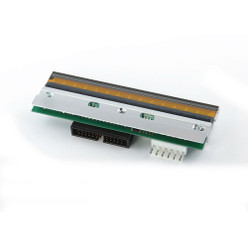
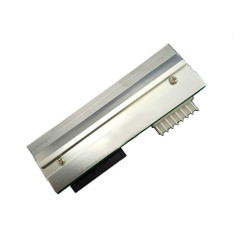
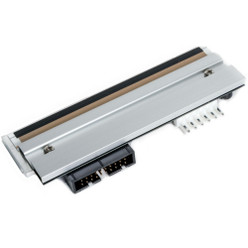
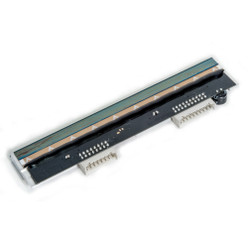
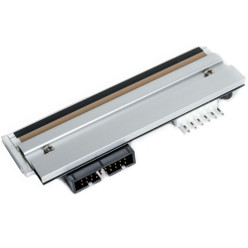
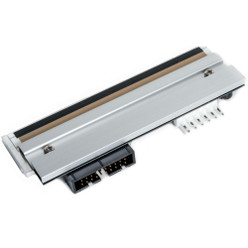
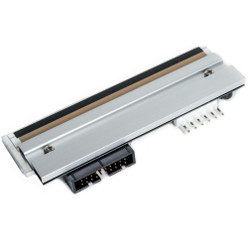
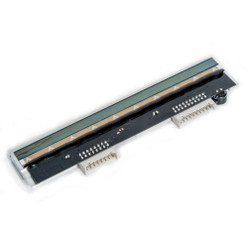
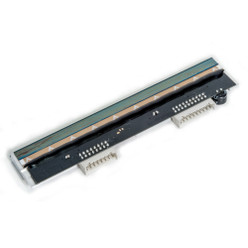
Our Thermal Printhead vs the Datamax Thermal Printhead.
-
Abrasive life of 100 kilometers for our printhead. Abrasive life of a Datamax printhead may only be 10 kilometers.
-
Thermal life of 100 million pulses for our printhead.
Stated pulse life of Datamax print head is 50 million pulses.
-
Independent lab testing showed the resistance in our
thermal printhead will began to change after 330,000 inches. A Datamax
printhead tested in identical lab conditions showed resistance change at
30,000 inches.
-
Our printhead is built for a 100% dot duty cycle.
Datamax's
stated duty cycle is 90%. Our printhead duty cycle provides you with the
highest clarity, print accuracy, and reproduction available in a printhead.
-
Dot density up to 300 dpi (12 dpmm)
- Print speed up to 12 inches (305mm) per second
- Resistor line location (edge, near edge, etc.) Allows you to print at the
edge of your media.
-
Direct thermal or thermal transfer printhead.
How do we
achieve these results?
-
Our Printhead is built using a protective diamond
like carbon (DLC) coating. Our Diamond like coating provides a surface hardness
equivalent to Rockwell 85 to 90. The Diamond like coating will protect the
printhead when used in bar coding, ticket printing, thermal printing, printing
against ribbons, and printing using other abrasive media. The Datamax printhead does
not use a protective coating.
-
Our Thermal Print head uses Thick film technology. The
Datamax
will use Thin Film. Thick Film printheads use gold, insulating and resistive
pastes which are screen printed onto a ceramic substrate. The Datamax printhead will
use a pressure contact between the printed circuit board and ceramic substrate.
The thick film technology allows for a reduction in resistance versus pressure
contact technology. As a thermal printhead wears the value of resistance changes. A 15%
change in the value of resistance results in a printhead unable to function and
print the required dot density.
-
Our thermal printhead will use Gold wire bond between
the printed circuit board and ceramic substrate. We believe the gold wire
bond provides for greater signal integrity and a longer life of the
printhead. A Datamax thermal
printhead will just use pressure contact and eliminate the gold wire bond. Gold
is an expensive conductor we believe works best in an abrasive print head
environment.
-
Our thermal print head uses a hard black epoxy and silicon
glass clear coating to protect the gold wire bonds and sensitive electronic
circuitry against moisture and harsh environments. The Datamax thermal printhead will use
pressure contact without a coating.
-
Our thermal printhead incorporates the use of positive
temperature coefficient (PTC) and negative temperature coefficient (NTC)
thermistors for regulating temperature in the printhead. The PTC thermistor is
used to quickly bring the printhead up to operating temperature, increasing your
first time print cycle, and conserving energy. The NTC thermistor is used to
regulate the heat output which conserves energy and prolongs the life of the
printhead. Typically, the Datamax printhead will not use the NTC and PTC
thermistors. This combination thermometer and resistor device is expensive.
- Our printhead will use Dot history control (DHC) for consistent print quality at
high speed
|
Ganson Engineering, Inc., 2901 W. Clarendon , Phoenix, AZ 85017 Tel 602-264-0288, Fax 602-277-5181
|
Refer a new customer to us and after they place their
first order, we will reward you with a 5% discount on your next purchase!
|
|
|